
The 5-Minute Microwave Cleaning Hack That Actually Works
No scrubbing, no harsh chemicals, no elbow grease. Just steam, a bowl of water, and five minutes — and your microwave will wipe clean.
The Homeowner’s Corner — A Free Resource from ECO Glass Windows And Doors
This article is part of The Homeowner’s Corner — a free resource library from ECO Glass Windows And Doors where we share practical tips, guides, and how-tos for everyday homeowners. Not everything has to be about windows and doors. We’re your neighbours, and good neighbours share what they know.
When you’re ready to talk about new
windows,
entry doors,
patio doors,
garage doors,
or blinds, shades, shutters, or window coverings — we’d love to help.
Reach out for a free quote — serving the Greater Toronto Area and surrounding communities.
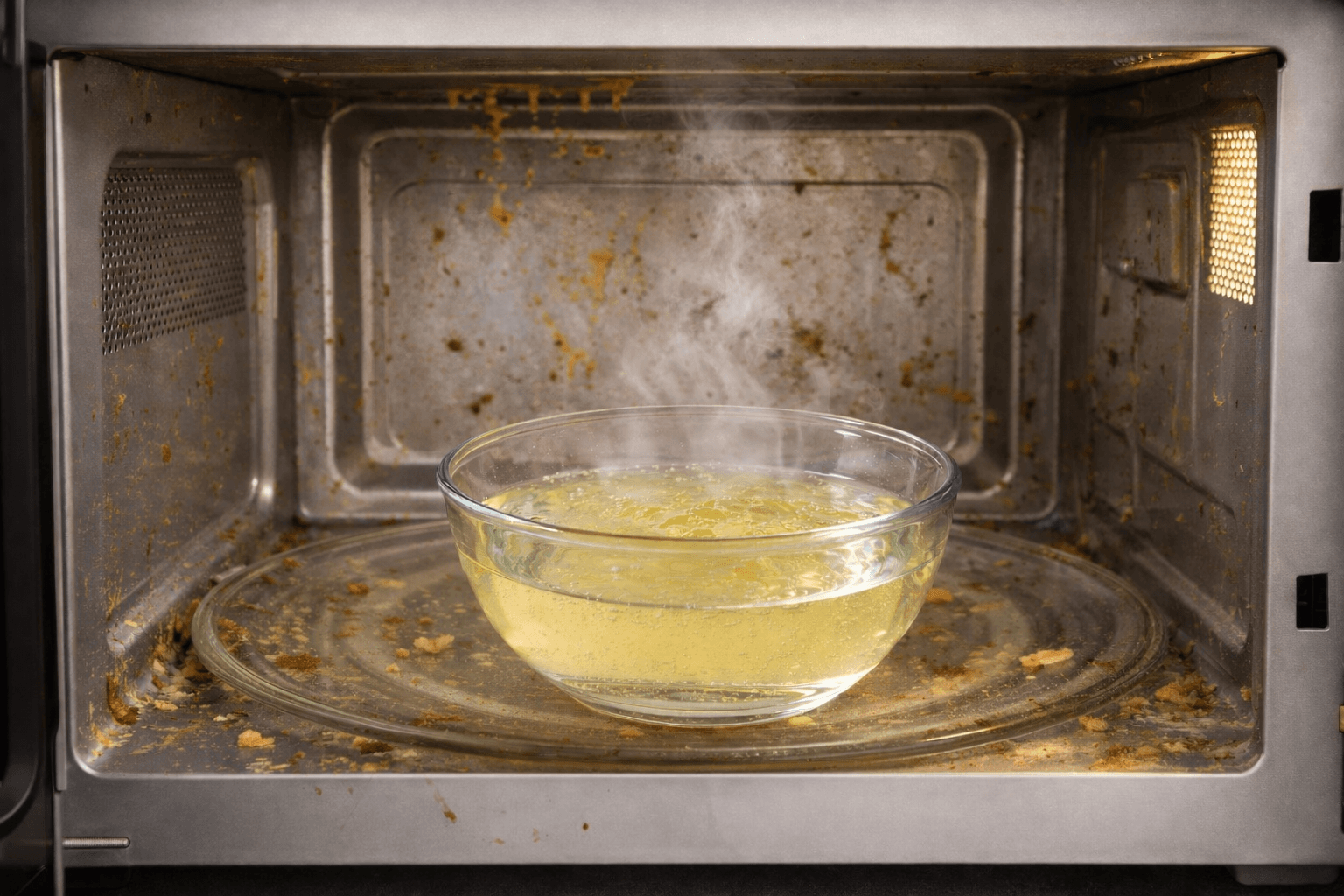
Why Microwaves Get So Gross So Fast
Every time food heats up, moisture and grease vaporize and coat every surface inside the cavity. The problem is that microwaves heat unevenly — the centre of the turntable gets most of the energy while the edges stay cooler. Splattered food dries quickly, bakes onto the walls with the next use, and becomes progressively harder to remove the longer it sits. Most people ignore it until it’s a legitimate biohazard.
The good news is that the same physics that cause the problem — heat, steam, and moisture — are what solve it. You don’t need a specialized cleaner. You need to re-hydrate the grime so it wipes off without effort.
What You Need
That’s genuinely it. No specialty products, no scrubbing pads, no microwave-specific cleaning sprays. Everything on this list is already in most kitchens:
- A microwave-safe bowl (glass or ceramic — not plastic)
- 1 cup of water
- 1 cup of white vinegar — or — half a fresh lemon — or — just water alone
- A clean cloth or sponge for wiping
- That’s it

The Method — Step by Step
The whole process is five minutes of microwave time plus a few minutes of resting and wiping. Here it is in full:
Mix your solution in the bowl
Combine 1 cup of water with 1 cup of white vinegar in a microwave-safe bowl. If you’re using lemon instead, squeeze half a lemon directly into the water and drop the squeezed half in as well — the rind releases oils that cut grease and leave a clean citrus scent. Use a large enough bowl and do not fill it more than halfway — the liquid will boil vigorously and an overfilled bowl will overflow inside the microwave before it even finishes steaming.

Microwave on high for 5 minutes
Place the bowl in the centre of the turntable and run the microwave on high for a full 5 minutes. The solution will come to a rolling boil and fill the interior with dense steam. You’ll likely see condensation forming on the door — that’s exactly what you want.
Do not open the door — let it sit 2–3 minutes
This is the step most people skip, and it makes a significant difference. When you keep the door closed after the cycle, the steam stays trapped inside and continues working on the stuck-on residue. It’s doing the scrubbing so you don’t have to. Wait a minimum of 2 minutes. 3 is better.
Carefully remove the bowl and wipe everything down
The bowl and the water inside will be very hot — use oven mitts or a folded dish towel to remove it. Also check the turntable plate before you grab the bowl — if any liquid boiled over during the cycle, there will be water sitting on the plate and it can spill when you pull things out. Tilt nothing until you’ve had a look. Then take a damp cloth and wipe the interior walls, ceiling, and floor of the microwave. The gunk should come off with almost no resistance. For any stubborn spots, dip your cloth directly into the warm vinegar water from the bowl and apply it with slight pressure.

Wipe the door inside and out, and the exterior
Don’t forget the inside of the door — it catches a lot of spray. Wipe the seal around the door edge as well. Finish with a quick wipe of the outside surfaces and the keypad. Use a barely-damp cloth on the buttons to avoid moisture getting into the electronics.
Vinegar vs. Lemon vs. Plain Water
All three versions of this hack work. The difference is mostly in the deodorizing effect and what you have on hand:
White Vinegar + Water
The strongest deodorizer of the three. Cuts grease odours and food smells effectively. The vinegar smell dissipates quickly once the door is open. Best all-around choice for a heavily soiled microwave.
Best for odourLemon + Water
Leaves a pleasant citrus scent. The natural citric acid helps cut grease and the lemon rind oils give it a light antimicrobial effect. Great option if you find the vinegar smell off-putting.
Best scentPlain Water
Still works for cleaning — the steam alone is what loosens the gunk. It just won’t tackle odours, and it’s slightly less effective on grease. Use this when you have nothing else handy.
Works fineWhat NOT To Do
- Don’t use metal bowls or containers — metal arcs in the microwave and can damage the magnetron permanently.
- Don’t use commercial spray cleaners inside the cavity — the chemicals can penetrate the interior lining and are difficult to fully rinse away. They can also affect food cooked afterward.
- Don’t open the door right after the cycle ends — you lose all the trapped steam and have to work harder. Wait the full 2–3 minutes.
- Don’t use abrasive scrubbing pads — the interior coating of most microwaves scratches easily. Scratches trap food particles and make future cleaning harder.
- Don’t soak the keypad or vent areas with liquid — moisture in the electronics can cause malfunctions. A barely-damp cloth is all you need for the outside.
- Don’t run the microwave empty — there’s no liquid in the bowl scenario, but as a general rule: always make sure the bowl has water in it before starting.
Keeping It Clean Longer
The best strategy is making the deep clean unnecessary in the first place. A few small habits dramatically reduce how often you need to do the full steam treatment:
Habits That Keep Your Microwave Clean
Most microwave grime is avoidable — here’s how.
Cover everything
A microwave-safe cover or a dampened paper towel over the dish prevents 90% of splatter before it ever hits the walls.
Lower the power for liquids
Soups and sauces boil violently on full power. Use 70–80% power and they heat evenly without erupting.
Spot-wipe immediately
A fresh splatter takes 10 seconds to wipe up. A baked-on one takes the full steam cycle. Deal with it right away.
Steam clean monthly
Running this hack once a month — even when the microwave looks fine — keeps residue from ever building up to the problem stage.
Quick Checklist — The Full 5-Minute Method
- Grab a microwave-safe glass or ceramic bowl
- Add 1 cup water + 1 cup white vinegar (or half a lemon squeezed in) — do not fill the bowl more than halfway
- Place bowl in the centre of the turntable
- Microwave on high for 5 minutes (6–7 for a very dirty one)
- Leave the door closed — wait 2–3 minutes minimum
- Carefully remove the hot bowl with oven mitts
- Wipe interior walls, ceiling, and floor with a damp cloth
- Remove turntable plate and wash separately
- Wipe inside of door, door seal, and exterior
- Done — no scrubbing required

That’s All There Is to It
Steam does the work. Vinegar handles the smell. You handle the wipe-down. A genuinely clean microwave in under 10 minutes, no specialty products required — and if you do it monthly, it never gets bad enough to be a problem.